
Return to Journal
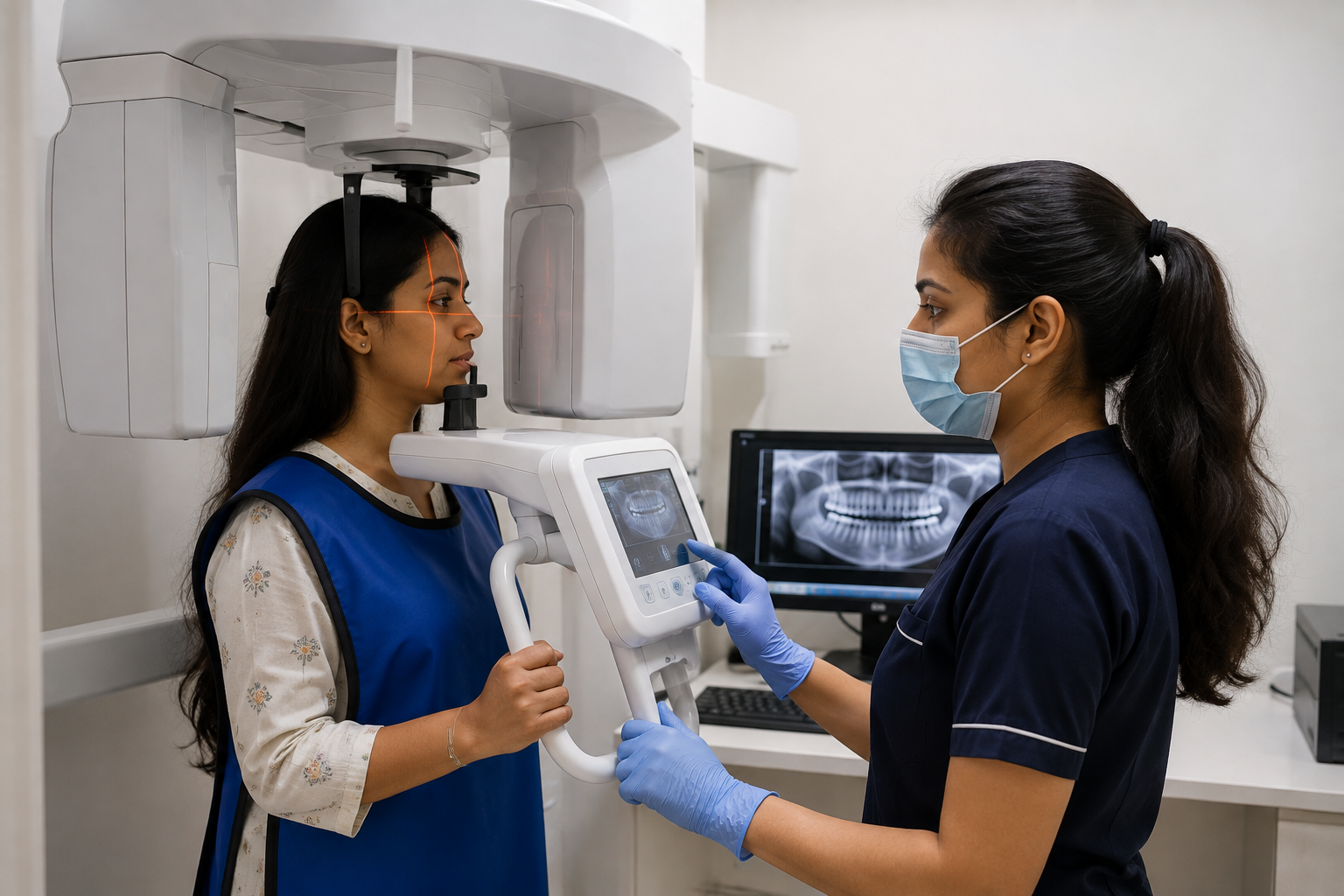
These roles represent different levels and types of responsibility. A CBCT or OPG Technician is closely connected to imaging acquisition, while a Radiology Workflow Coordinator is more focused on how information and cases move through the diagnostic system.
SOVAKA's own ecosystem combines multi-centre imaging operations, centralized radiology infrastructure, structured clinical reporting and technology-enabled workflows.
That makes workflow understanding an important part of the training rather than treating imaging equipment as an isolated skill.
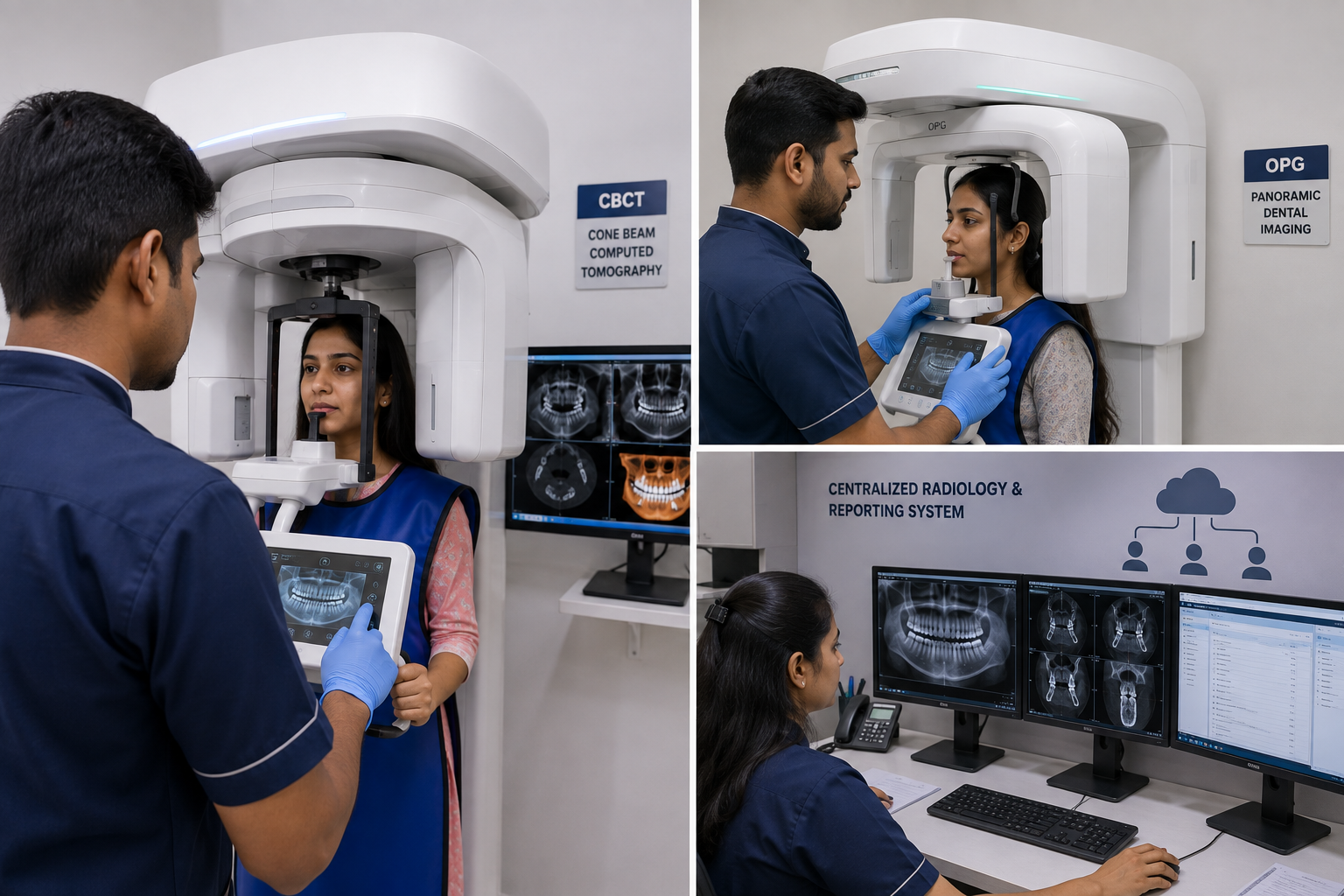
SOVAKA's model specifically emphasizes real operational exposure, practical-first training, structured workflow learning, and ecosystem-aligned job opportunities.
Dental Radiology Technician Jobs in India: Career Path, Roles and Growth Potential
TL;DR
- Dental radiology technician jobs in India can extend beyond basic imaging operations into CBCT, OPG, radiology workflow coordination and dental diagnostic centre operations.
- SOVAKA Lifesciences offers a 1-month practical training program designed around real dental imaging environments, with training conducted inside active Nidaan CBCT & OPG Centres in Pune.
- The program is open to candidates from Science, Commerce, Arts and vocational backgrounds. A science background and previous healthcare experience are not mandatory.
- Training focuses on practical areas including machine operations, imaging workflows, patient communication, scan acquisition, exposure protocols and diagnostics support.
- SOVAKA identifies four potential career pathways: CBCT Technician, OPG Technician, Radiology Workflow Coordinator and Dental Diagnostic Centre Operations.
- Job opportunities may be available for selected candidates after training, but consideration depends on performance, professionalism, organizational fit and operational vacancy. Training does not guarantee employment.
- Learn the equipment.
- Learn the imaging workflow.
- Learn to work with patients.
- Understand how cases move through the diagnostic system.
- Demonstrate professional and operational competence.
What Does a Dental Radiology Technician Do?
A dental radiology technician works within the imaging side of a dental diagnostic environment. The role is not limited to operating equipment. It involves following established workflows, working with patients, acquiring appropriate images, and supporting the wider diagnostic process. SOVAKA describes its practical training around four areas: real operational exposure, practical-first training, structured workflow learning and a job-ready ecosystem. The training specifically covers machine operations, imaging workflows, patient communication and scan acquisition systems. This means the role can involve several connected responsibilities:- Preparing and communicating with patients.
- Following positioning and imaging procedures.
- Operating CBCT or OPG equipment.
- Following exposure and acquisition protocols.
- Supporting structured imaging workflows.
- Coordinating information within the diagnostic process.
- Working professionally inside an active clinical environment.
What Career Paths Are Available After Training?
SOVAKA specifically identifies four job pathways within its training and job opportunity ecosystem.| Career pathway | What the role relates to |
| CBCT Technician | Practical operation and workflow support for CBCT imaging |
| OPG Technician | Panoramic imaging operation and associated workflows |
| Radiology Workflow Coordinator | Coordination of imaging and reporting workflows |
| Dental Diagnostic Centre Operations | Broader operational support within a dental diagnostic centre |
CBCT Technician: Building Practical Imaging Skills
A CBCT Technician works with cone beam computed tomography imaging workflows. The training environment at SOVAKA is designed to provide practical exposure to active CBCT and OPG centres rather than relying only on classroom instruction. Candidates undergo structured workflow drills covering exposure protocols, machine operation and diagnostics support directly from active clinical teams. For someone entering the field, this type of exposure matters because the technician has to work within an actual imaging environment. Equipment operation takes place alongside patient communication, scheduling, workflow coordination and other operational requirements. The goal is therefore not simply to recognize a CBCT machine. It is to become comfortable working within the workflow surrounding it.OPG Technician: Developing Panoramic Imaging Competence
An OPG Technician works with panoramic dental imaging workflows. As with CBCT, the role requires practical familiarity with equipment operation, patient interaction, and structured imaging procedures. SOVAKA's broader imaging ecosystem uses standardized CBCT and OPG workflows across its centres, supported by centralized radiology systems and structured reporting. For a trainee, this creates an important distinction between learning the theory of OPG and learning how OPG fits into a functioning diagnostic centre.Radiology Workflow Coordinator: Understanding the System Behind the Scan
Modern dental imaging does not end when the scan is acquired. Imaging information may need to move through reporting systems and coordinated workflows before the diagnostic process is complete. SOVAKA's infrastructure includes centralized reporting, cloud PACS, remote diagnostic nodes, OMR reporting desk support, and integrated quality control. This is where a Radiology Workflow Coordinator can play a role. Rather than concentrating only on equipment, the position relates to coordinating the operational flow around imaging and reporting. Understanding how technicians, radiologists, imaging systems and reporting workflows connect can therefore become an important part of a modern dental imaging career.
Does a Science Background Matter?
Not necessarily. SOVAKA's training eligibility is designed to accept candidates from Science, Commerce, Arts and vocational backgrounds. A science background is specifically not mandatory, and prior healthcare experience is not required. The stated minimum requirements are:- 18 years of age or older.
- 12th Standard pass or higher.
- Basic computer knowledge.
- Ability to read and understand educational material in English, Marathi or Hindi.
Why Practical Training Inside a Real Centre Matters
There is a major difference between learning about dental imaging and learning inside a functioning dental imaging centre. SOVAKA explicitly describes its program as operating inside functional Nidaan CBCT and OPG centres in Pune. Candidates are exposed to real clinical workflows and imaging operations, including structured workflow drills, exposure protocols, machine operation and diagnostics support. This practical setting allows candidates to understand how different parts of the workflow connect. You are not learning equipment operation in isolation. You are learning how imaging fits into a real operational environment where patients, clinical schedules, imaging systems and reporting workflows have to work together. SOVAKA's broader network currently describes six operational centres in the Pune region hub, 1,000+ monthly CBCT scans, 8+ specialist radiologists and 100% cloud PACS connectivity with structured reporting systems. Those figures provide the operational context in which the training ecosystem exists.What Skills Can You Build During the Training?
The training is designed around practical skills rather than only theoretical learning.Imaging and Equipment Skills
Candidates receive practical exposure to machine operations, imaging workflows, exposure protocols and scan acquisition systems. These skills form the technical foundation for CBCT and OPG-related roles.Patient and Communication Skills
Because the training occurs inside active imaging environments, candidates also learn within patient-facing workflows. SOVAKA specifically identifies patient communication as part of its practical-first training approach.Workflow Skills
Candidates are exposed to standardized operational systems, reporting coordination and modern imaging workflows. This is particularly relevant for people interested in progressing beyond equipment operation into radiology workflow coordination or dental diagnostic centre operations.Technology-Enabled Workflow Exposure
SOVAKA's wider ecosystem includes cloud PACS infrastructure, structured CBCT and OPG reporting, remote radiology operations and AI-assisted imaging support. The training therefore sits within a broader technology-enabled dental imaging environment.How Does the Job Opportunity Pathway Work?
The most important thing to understand is that training completion does not equal guaranteed employment. SOVAKA describes its program as providing training and potential ecosystem opportunities. Its website states that candidates can enter the ecosystem pipeline after completion, creating job opportunities for deployment within Nidaan diagnostic centres. However, employment consideration should be understood realistically. Suitable candidates may be considered based on factors such as:- Performance during training.
- Professionalism.
- Organizational fit.
- Operational requirements.
- Available vacancies.
What Can a Dental Radiology Technician Career Look Like?
A practical career pathway can develop from technical learning toward broader operational responsibility. You might begin by learning the fundamentals of CBCT and OPG workflows. As you become more comfortable with equipment, patient communication and acquisition procedures, you can build experience in the operational systems surrounding imaging. From there, the pathway may align with one of SOVAKA's identified roles: CBCT Technician → OPG Technician → Radiology Workflow Coordinator → Dental Diagnostic Centre Operations This is not a guaranteed promotion sequence. These are distinct career pathways identified by SOVAKA, and the actual role available to a candidate depends on performance, suitability, and operational requirements. The broader SOVAKA ecosystem is built around imaging infrastructure, integrated radiology workflows, training and job opportunities, and AI-ready systems. That allows candidates to develop skills within an ecosystem rather than learning imaging as a completely isolated function.What Should You Look for Before Choosing a Dental Radiology Technician Course?
If you are comparing dental radiology technician courses, the course title alone should not determine your decision. Look at what you will actually experience during training. A useful checklist is:| What to check | Why it matters |
| Real centre exposure | Shows whether training happens in an operational environment |
| CBCT and OPG exposure | Builds skills relevant to the stated technician roles |
| Machine operations | Provides practical equipment familiarity |
| Patient communication | Prepares you for real patient-facing workflows |
| Scan acquisition | Develops core imaging workflow competence |
| Reporting coordination | Helps you understand the wider diagnostic process |
| Structured workflows | Builds consistency and operational discipline |
| Clear job language | Helps distinguish potential opportunities from guaranteed placement |